
Why Reassurance Can Fuel OCD: The Role of Uncertainty and When the Solution Becomes the Problem

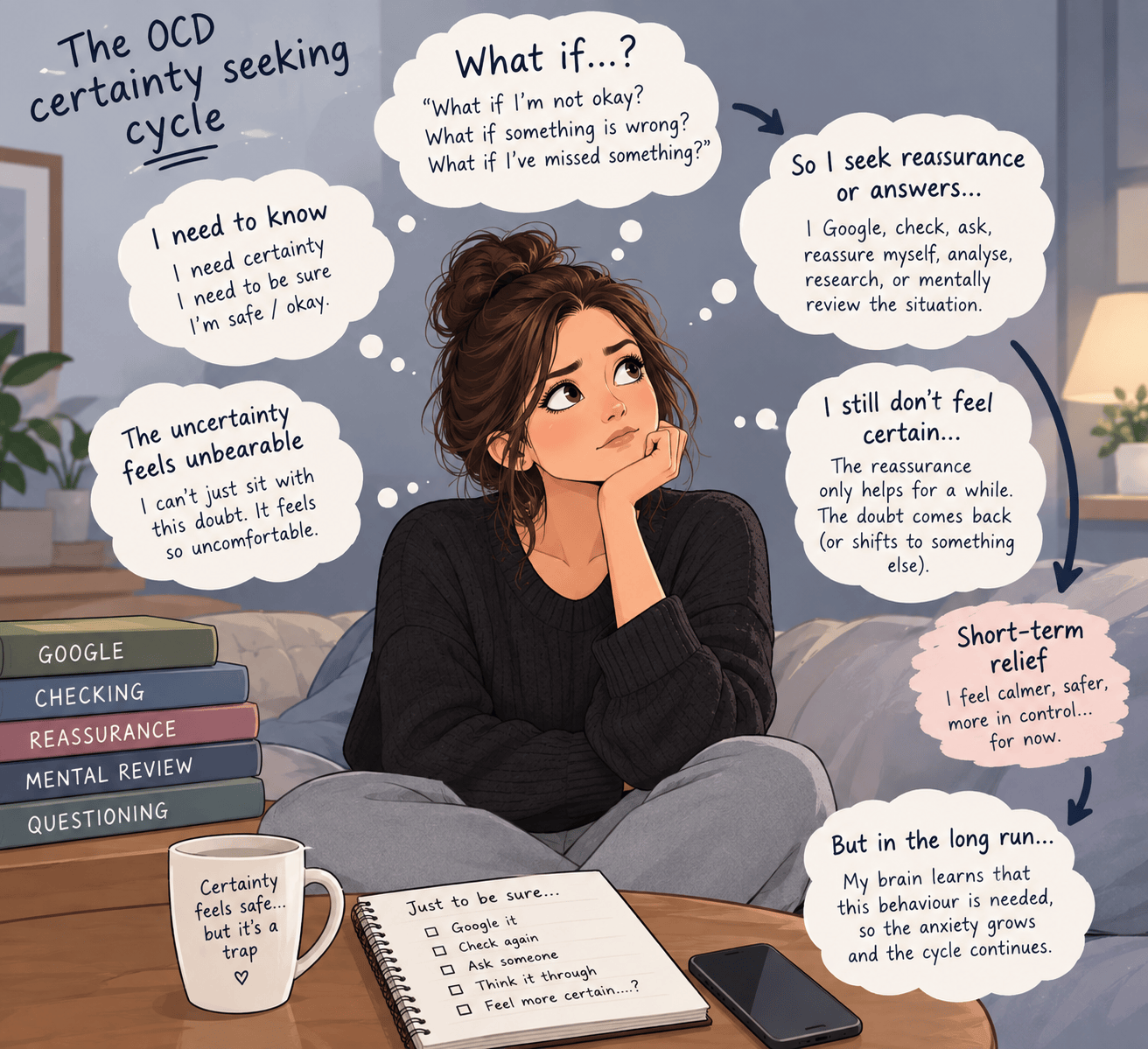
There is something slightly ironic about OCD. The things we do to try to make ourselves feel better can sometimes be the very things that keep OCD going. This is a concept I cover a lot when working with OCD: sometimes the solution becomes the problem. When we’re anxious, it makes complete sense that we want to make it better. Anxiety is uncomfortable, and when that anxiety is being driven by an intrusive thought or a nagging sense that something isn’t quite right, our instinct is often to try to work out what is going on. We want an explanation, reassurance, certainty or some way of knowing that we’re okay. If we can find that answer, we feel better. The difficulty is that our brain then learns that we needed to do something to get rid of the anxiety.

This is an important part of understanding why compulsions can become so persistent. Checking the door can make you feel more certain that it’s locked. Asking your partner whether they think you’re a good person can make you feel reassured. Googling an intrusive thought can produce an explanation that makes the thought feel less frightening. None of these things are inherently ridiculous or irrational responses to uncertainty. In fact, they make perfect sense if your goal is to feel certain and safe. The problem is that OCD doesn’t tend to stop at “That’s enough.” The relief is short-term, the doubt returns, and your brain has now learned that the way to deal with that doubt is to check again, ask again, research again or think about it a little more.

I think this can be particularly difficult for some people with OCD because, in my experience, many of the people I work with are incredibly thoughtful, imaginative, creative and conscitentious. They can see possibilities that other people might not consider, make connections quickly and create incredibly detailed stories in their minds. The problem is that a creative mind doesn’t only have the capacity to imagine good stories; it can imagine frightening ones too. Give it a “What if?” and it can build an entire narrative around it. One possibility leads to another, and suddenly something that started as a fleeting thought has become a complicated scenario that feels as though it needs to be examined.

I also see a lot of people with OCD who are natural problem-solvers. They are people who have spent much of their lives being good at figuring things out. When something is difficult, they think about it, analyse it from different angles, gather information and work out what to do next. That is a hugely useful skill in many areas of life, for example, if you’re faced with a difficult problem at work, thinking it through can help you find a solution. If you’ve made a mistake, reflecting on what happened can help you avoid making the same mistake again. The difficulty is that OCD presents uncertainty as though it were a problem that can be solved through thinking. For someone who has learned throughout their life that thinking carefully and finding the right answer is how you deal with difficult things, OCD’s invitation to “just think about it a little more” can be incredibly persuasive.

It often sounds like, “I just need to work out what this thought means,” or “I need to remember exactly what happened,” or “If I can understand why I had that thought, I’ll know whether I need to be worried.” The person isn’t necessarily consciously trying to avoid their anxiety. They may genuinely believe they’re dealing with it. They’re trying to solve the problem in the same way they’ve solved other difficult problems throughout their life. The catch is that some of the questions OCD asks simply don’t have the kind of definitive answer that our problem-solving mind is looking for.

This is one reason why trying to understand OCD itself can sometimes become part of OCD. Learning about OCD is generally a very good thing -understanding intrusive thoughts, compulsions and avoidance can help people recognise what is happening and make sense of experiences that may have previously felt frightening or incomprehensible. But there can be a subtle shift from learning about OCD to checking about OCD. You might start by reading an article about intrusive thoughts, then find another article that describes your experience even more closely. You read about different OCD subtypes and start wondering which one you have. You take an online questionnaire, then another because you’re not sure whether you answered the first one correctly. You search forums to see whether other people have had exactly the same thought. You find someone who has had a remarkably similar experience and feel reassured, but then notice one small difference and start wondering what that difference means.

At that point, you’re potentially no longer learning something new. You’re trying to reach a feeling of certainty. And OCD is very good at moving the goalposts. You find an answer to one question and another question appears. You reassure yourself that having a thought doesn’t mean you want to act on it, but then your mind asks whether you can be completely certain about that. You read that intrusive thoughts don’t reflect your character, but then start analysing whether your particular thought was too vivid, too specific or felt too real for that reassurance to apply. The information you’ve found might be completely accurate, but the problem is the function it’s serving. Are you reading because you’re interested in understanding OCD, or because you need the information to make the anxiety go away?

The same thing happens with reassurance. Imagine someone has the thought, “What if I’m actually a bad person?” They ask their partner, “Do you think I’m a good person?” Their partner says yes, of course they do, and the anxiety settles. For a while, everything feels okay. Then the doubt returns, perhaps in a slightly different form: “But you really don’t think I’m a bad person, do you?” The partner reassures them again. It can be very difficult to understand why that answer doesn’t eventually become enough, but OCD isn’t really looking for an answer; it’s looking for certainty, and certainty is something none of us can achieve completely.

Memory is a particularly good example of how this can backfire. Someone might remember locking the front door but then have the thought, “Did I actually lock it?” They go back and check and see that it is locked, so they feel reassured. But later another doubt appears: “Did I check the right door?” So they check again. Then perhaps they wonder whether they were actually paying attention when they checked, or whether they’re remembering the first check or the second check. The more they check, the more complicated the memory becomes. Repeated checking can actually undermine confidence in memory rather than strengthen it. We’re adding more and more moments that now need to be remembered and distinguished from one another. Instead of reducing doubt, we’re multiplying opportunities for doubt: Was that definitely what I saw? Was I paying attention? Did I really remember doing it, or am I remembering checking it? This is why someone with OCD can genuinely feel as though their memory is becoming unreliable. It isn’t necessarily that their memory was poor in the first place. Their repeated attempts to achieve absolute certainty may simply be creating more uncertainty.

There is a useful parallel here with the way people can sometimes use alcohol or drugs to manage anxiety. Someone who feels socially anxious might have a drink before going to a party and discover that the alcohol makes them feel more relaxed and less self-conscious. Their brain has learned that alcohol provides relief from anxiety. Over time, they may become increasingly reluctant to face social situations without it, because the thing they discovered as a solution to the anxiety has become something they feel they need in order to cope with the anxiety. Not only that but they rely on ever increasing amounts of alcohol to achieve the same result- it just isn’t enough anymore. Like in OCD, the behaviour is being reinforced because it removes something unpleasant in the short term. Only in OCD, that behaviour might be checking, reassurance seeking, rumination, avoidance or researching rather than drinking, but the important learning can be similar: “When I feel this uncomfortable, I need to do something to make the feeling go away.”

This is also why I think it’s important not to simply tell someone with OCD to stop researching or stop asking for reassurance. These behaviours usually make sense to the person doing them. They have a purpose. They are an attempt to cope with something that feels genuinely distressing. The more useful question is what the behaviour is doing for them. If you’re reading about OCD because you want to understand what ERP means, that’s very different from spending another two hours searching because you need to know whether your particular thought definitely counts as OCD. If you’re asking your therapist a question because you need information to help with treatment, that’s different from asking the same question in several different ways because you haven’t quite achieved the feeling of certainty you’re looking for.

And this is where AI creates a particularly interesting new version of the same problem. It is now incredibly easy to describe an intrusive thought or an uncomfortable situation to an AI tool and ask it to explain what it means. You can ask whether your thought is normal, whether your reaction means something about you, whether what happened sounds like OCD, whether you’ve done something wrong or whether you’re doing ERP correctly. You can then ask a follow-up question, and another one, and another one, until the answer feels reassuring enough. The technology itself isn’t necessarily the problem; AI can be a useful source of general information. But if you find yourself repeatedly returning to it whenever doubt appears because you need another answer before you can move on, it may be functioning as reassurance in exactly the same way that Google, Reddit, a partner or even a therapist can.

So what do we do instead? The answer can feel frustratingly simple: we practise not solving the uncertainty. That doesn’t mean ignoring genuine problems or refusing to seek appropriate information. It means becoming more comfortable with the fact that OCD will sometimes present you with a question that cannot be answered with complete certainty. You might notice the urge to Google something and decide not to. You might want to ask your partner for reassurance but allow the question to remain unanswered. You might notice yourself mentally replaying something that happened earlier in the day and decide not to keep analysing it. At first, this can feel worse, because you’ve removed the thing you normally use to bring the anxiety down. But that discomfort is part of the learning. You’re giving your brain the opportunity to discover that uncertainty can be uncomfortable without being dangerous, and that you don’t have to resolve it before you can carry on with your life.

Ultimately, you don’t need to understand your OCD perfectly in order to recover from it. You don’t need to identify every subtype, find an explanation for every intrusive thought, remember every detail of every situation or become completely certain that you’re doing ERP correctly. In fact, seeking that certainty can sometimes become the very thing keeping you stuck. Recovery is about becoming increasingly willing to have unanswered questions and still get on with the things that matter to you (your values).

So if you find yourself spending hours reading about OCD, asking questions, checking your memory, seeking reassurance or trying to understand your thoughts from every possible angle, it can be useful to pause before looking for the next answer and ask yourself one simple question: “Am I learning something useful, or am I trying to make uncertainty go away?” Sometimes the thing we’re using to solve the problem has quietly become part of the problem itself. And when that happens, the answer isn’t necessarily to find a better solution. Sometimes the solution is learning that you don’t need one.
From a CBT Therapist: Understanding the New CANMAT ICOCS International OCD Treatment Guidelines

I was lucky enough to attend the ORCHARD OCD international scientific conference at the start of June in London. This conference was filled with the latest cutting edge discoveries and research in the world of OCD. The atmosphere in the room was incredible- experts from around the world all working towards a common goal- to effectively treat all sub-types and severities of OCD. 

At the end of the 2nd day of the conference, the new international treatment guidelines (CANMAT ICOCS Guidelines for Treatment of OCD) were unveiled by Prof. Michael van Ameringen. This was a pretty big deal.

This is my take on the guidelines- none of this is intended to read as fact- I am not a medical doctor and it is my understanding as an OCD CBT therapist. If you are interested in reading the full paper then it is available here:

Journal of Psychiatric Research | CANMAT ICOCS Guidelines for Treatment of OCD | ScienceDirect.com by Elsevier 

What stood out to me in the new international OCD treatment guidelines

As a CBT therapist, I’m always interested when new treatment guidelines are published. Not because I expect them to revolutionise practice overnight, but because they offer an opportunity to see where the evidence is moving and whether that aligns with what we’re seeing clinically.

Having read the new guidelines, what struck me most wasn’t a dramatic new intervention. Instead, it was the clarity around treatment sequencing, the continued emphasis on CBT with Exposure and Response Prevention (ERP), and the realistic approach taken towards medication management.

CBT with ERP remains central

One of the clearest messages throughout the guidelines is that CBT incorporating ERP remains a first-line treatment for OCD.

This isn’t particularly surprising. Decades of research have demonstrated that ERP is one of the most effective interventions we have for OCD. What I found interesting, however, was the extent to which the guidelines continue to position ERP at the centre of treatment, even as newer biological and neuromodulation approaches emerge.

This serves as an important reminder that not all CBT is OCD-specific CBT. The guidelines repeatedly distinguish between general CBT approaches and CBT that includes structured ERP. Simply discussing intrusive thoughts, challenging cognitions, or teaching anxiety-management techniques is not the same as helping someone systematically approach feared situations whilst resisting compulsions.

In practice, this distinction matters. Many people referred for OCD report having had previous therapy that helped them understand their thoughts but did little to change their relationship with them.

The evidence continues to suggest that behavioural change remains a critical component of successful treatment. At the conference, there was also discussion of emerging neuroimaging findings highlighting that some of the most notable changes in brain structure and function are associated with the repeated engagement in OCD-related behaviours over time. In other words, responding to intrusive thoughts with compulsions appears to reinforce patterns of neural activation that can, in some cases, be observed on brain imaging.

From a CBT perspective, this reinforces the importance of targeting behaviour directly. By focusing on high-quality CBT for OCD, particularly Exposure and Response Prevention, and supporting changes in how individuals respond to intrusive thoughts, we are not only reducing symptoms at a psychological level but also potentially influencing the underlying neural patterns that maintain the disorder.

The guidelines endorse shared decision-making

One aspect of the treatment pathway I appreciated was the emphasis on shared decision-making. Rather than presenting a rigid hierarchy, the guidelines acknowledge that some individuals will prefer psychological treatment, whilst others may opt for medication or a combination of both.

For mild to moderate OCD, either CBT with ERP or an SSRI may be offered as a first-line intervention.

However, for individuals with more severe symptoms, greater functional impairment, or where a single treatment has proven insufficient, the guidelines increasingly favour combined treatment involving both ERP and medication.

This feels clinically sensible. While many people improve with either treatment alone, severe OCD often benefits from a multi-modal approach.

Medication: adding clarity

Another point emphasised throughout the guidelines is that OCD medication treatment differs from depression treatment.

SSRIs remain the recommended first-line medications, but the guidelines highlight several realities that patients are often not told:

  • Higher doses are frequently required (titrating to the maximally tolerated dose).
  • Improvement often takes longer to emerge.
  • Adequate treatment trials may need to continue for 12 weeks or longer.
  • Partial improvement is common before substantial improvement occurs.

This has important implications for clinical practice.

I frequently meet clients who have concluded that medication “didn’t work” when, according to guideline standards, they may never have received an adequate dose or a long enough trial.

The guidelines therefore encourage optimisation of SSRI treatment before moving on to more complex interventions. It also suggests that for those who have responded to an SSRI and are tolerating it well, continuing the treatment for at least 12 months and possibly indefinitely to prevent relapse.

What happens when first-line treatment doesn’t work: Augmentation and specialist interventions

Where symptoms remain severe despite appropriate first-line treatment, the pathway becomes increasingly specialised.

The guidelines support antipsychotic augmentation for selected individuals who have not responded adequately to SSRIs. This does not mean that OCD is considered a psychotic disorder. Rather, a small number of antipsychotic medications have been shown to enhance the effects of SSRIs in some treatment-resistant cases.

The strongest evidence remains for low-dose antipsychotic augmentation, particularly with risperidone, whilst aripiprazole is also supported by a growing evidence base. These medications are typically added to an existing SSRI rather than prescribed alone and are generally considered only after an adequate SSRI trial has been completed.

As with all medication decisions, the potential benefits must be weighed against possible side effects, including weight gain, metabolic changes, movement-related side effects, and sedation. For this reason, the guidelines recommend careful monitoring and specialist oversight when these medications are used.

The guidelines also discuss emerging augmentation approaches that target neurotransmitter systems beyond serotonin. In particular, there is increasing interest in glutamate-modulating treatments, reflecting evidence that glutamatergic dysfunction may contribute to OCD symptoms.

Memantine, originally developed for Alzheimer’s disease, is one of the mentioned medications. When added to an SSRI, it has shown promising results in some individuals with treatment-resistant OCD. Other drugs discussed within the wider evidence base include lamotrigine, topiramate and N-acetylcysteine (NAC), although the evidence remains less robust than for established first-line treatments.

For a smaller group of patients with severe and enduring OCD, neuromodulation approaches such as repetitive Transcranial Magnetic Stimulation (rTMS) and Deep Brain Stimulation (DBS) are discussed.

My understanding is that TMS works by using focused magnetic pulses to modulate activity in specific brain circuits involved in OCD, particularly those linked to cognitive control, threat monitoring, and habit formation. The goal is not to “erase” symptoms, but to alter the functioning of neural networks that may be overactive or dysregulated in OCD.

Clinically, studies have shown that some individuals experience a meaningful reduction in symptom severity following a course of rTMS, particularly when targeted to regions such as the supplementary motor area or dorsolateral prefrontal cortex. Improvements tend to be gradual rather than immediate, and are often most effective when TMS is delivered alongside ongoing psychological treatment rather than in isolation.

TMS represents a promising development in the field of OCD treatment, particularly for those who have struggled to respond to standard interventions, but it seems to remain an adjunct rather than a replacement for established first-line therapies such as CBT with ERP.

My Overall Impression

If I had to summarise the guidelines in one sentence, it would be this: they reinforce the importance of getting the basics right before assuming treatment has failed.

The document repeatedly returns to the same principles- accurate diagnosis, high-quality ERP, appropriately managed medication, and sufficient treatment duration.

It also gives hope- there are lots of treatment options available if CBT, or SSRI’s or CBT+SSRI’s have not worked.

Can AI Help OCD— and Why It Still Can’t Replace CBT

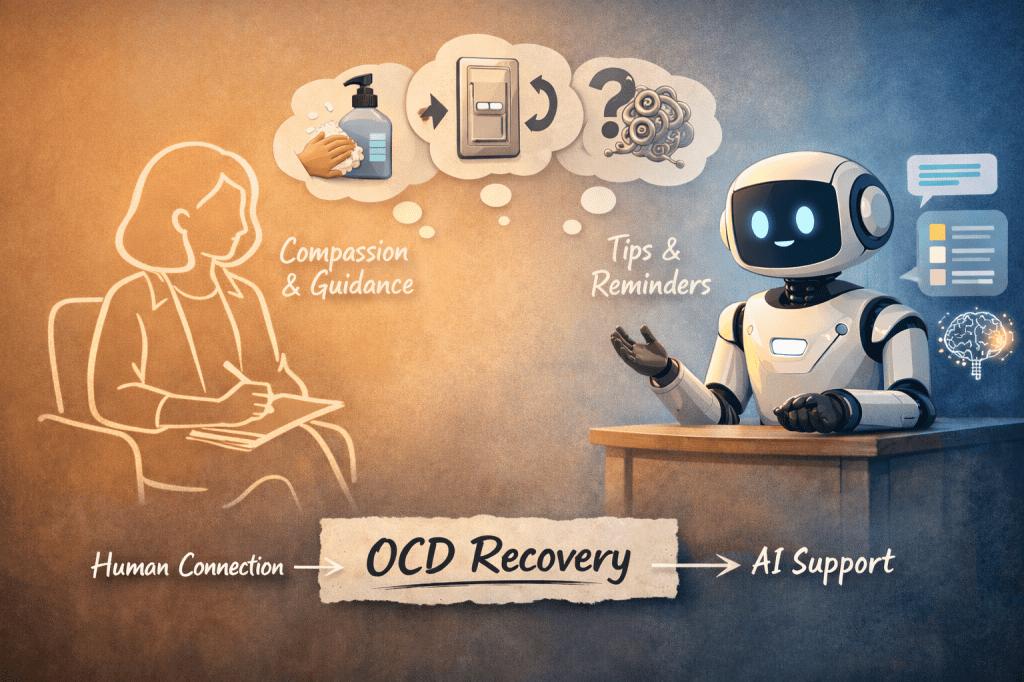
AI is increasingly being talked about in mental health spaces, and people with OCD are understandably curious. If an app or chatbot can explain intrusive thoughts, talk through exposure exercises, or offer reassurance in moments of anxiety, it can start to feel like therapy itself is becoming optional.

As someone who works with OCD using CBT and ERP, I think the truth sits somewhere more nuanced — and far more hopeful — than the idea of replacement.

AI can help people with OCD.

It just can’t do the work that actually changes OCD.

One of the genuinely helpful things AI can do is explain OCD clearly. Many people arrive in therapy after years of confusion and shame, convinced that their thoughts mean something terrible about who they are. Having access to explanations about intrusive thoughts, the OCD cycle, and why reassurance keeps the problem going can be hugely relieving. It can normalise experiences that people have often been too frightened to say out loud.

AI can also be useful between therapy sessions. OCD treatment doesn’t happen in the therapy room alone — it happens in everyday moments when someone resists a compulsion, sits with anxiety, or chooses uncertainty on purpose. Used carefully, AI tools can help people reflect on exposures they’ve done, notice patterns, or stay anchored to the principles of ERP when OCD is loud and convincing.

For people waiting for specialist treatment, this kind of support can feel like a lifeline. It can reduce isolation and help someone feel less alone with their thoughts while they’re taking steps toward proper care.

But this is also where the limits start to become clear.

OCD is exceptionally good at disguising itself as common sense, self-care, or even recovery. A key part of my job as a therapist is spotting when something that looks helpful is actually a compulsion in disguise. Reassurance-seeking, checking, mental reviewing, subtle avoidance — these are often invisible to the person doing them. AI, no matter how sophisticated, struggles here. It can accidentally reassure, validate certainty-seeking, or engage in endless “what if” conversations that keep OCD alive rather than weaken it.

ERP is not just about facing fears. It’s about doing so in a way that reduces compulsions rather than reinforcing them. That requires careful formulation, pacing, and adjustment. Sometimes the bravest thing in OCD therapy is not to answer a question, not to soothe, and not to rescue someone from discomfort. That kind of therapeutic restraint is deeply human and deeply relational.

There is also something important about being with another person who can tolerate your distress without trying to make it go away. OCD therapy often involves sitting in uncertainty together — allowing anxiety, doubt, and fear to exist without rushing to fix them. A therapist can hold that space, notice when things shift, and help repair moments when therapy itself becomes difficult. AI cannot do that in the same way, because it does not carry responsibility, judgment, or emotional presence.

Perhaps most importantly, effective OCD treatment is personal. Two people might both have contamination fears, but what those fears mean — responsibility, morality, danger, disgust — can be entirely different. Therapy works because it responds to the individual, not the label. AI responds to patterns in language, not the lived experience underneath them.

When AI is framed as a replacement for OCD therapy, it risks being harmful. People can end up stuck in cycles of reassurance, overly intense self-directed exposure, or increased shame when symptoms don’t improve. OCD is not a logic problem that disappears with the right explanation. It’s a learning problem that changes through repeated experience, support, and courage over time.

A more helpful way to think about AI is as an assistant, not a therapist. It can support learning, reinforce principles, and help people stay engaged between sessions. It can widen access and reduce barriers. But it should never pretend to do the work that belongs in a therapeutic relationship.

CBT for OCD works because a trained therapist helps someone face uncertainty, resist compulsions, and build trust in their own capacity to cope — again and again, over time. That process depends on formulation, judgment, and human presence.

AI can help with OCD.

It just can’t replace the human work of recovery.

Distinguishing Relationship OCD from Normal Relationship Worries

When it comes to relationships, it’s completely normal to have worries and doubts from time to time. After all, we’re all human, and it’s natural to question things when it comes to love and partnership. But for some people, relationship concerns can spiral out of control, leading to overwhelming thoughts and emotions that make it difficult to enjoy their relationship. This is where Relationship OCD (ROCD) comes in.

As a Cognitive Behavioural Therapy (CBT) therapist, I often help people navigate the fine line between what are normal relationship anxieties and what might actually be symptoms of ROCD. If you’re struggling with relationship-related worries, it can be helpful to understand how to distinguish between the two. In this blog post, I’ll break down the key differences between everyday relationship concerns and the more intense, persistent nature of ROCD.

What is Relationship OCD?

Relationship OCD (ROCD) is a form of obsessive-compulsive disorder where individuals experience intrusive thoughts, doubts, or fears specifically related to their romantic relationship. These thoughts are often irrational, exaggerated, and disproportionate to the actual situation. ROCD can cause significant distress and lead to compulsive behaviors, such as constant reassurance-seeking, excessive analyzing, or mental rituals to “fix” perceived problems in the relationship.

Normal Relationship Worries: A Healthy Part of Love

Every relationship has its ups and downs, and it’s completely normal to occasionally question things like compatibility, long-term goals, or even your feelings toward your partner. Here are some examples of normal relationship worries:

  1. Concerns about the future: Wondering whether you and your partner want the same things long-term (e.g., marriage, children, career paths).
  2. Occasional doubts: Feeling unsure after an argument or when faced with difficult situations—this doesn’t mean you’re questioning the entire relationship.
  3. Wanting to improve communication: It’s natural to want your relationship to grow and flourish, and sometimes that includes thinking about how you can be a better partner.
  4. Feeling insecure: It’s normal to feel a bit insecure sometimes, especially in the early stages of a relationship.

These worries, while sometimes uncomfortable, usually don’t disrupt your daily life. They come and go, and they don’t cause significant distress.

How to Recognize Relationship OCD

While normal relationship concerns are occasional and temporary, ROCD is more persistent and intrusive. Here are some key features that differentiate ROCD from typical relationship worries:

1. Intrusive, Repetitive Thoughts

People with ROCD experience obsessive thoughts that are irrational and hard to control. These might include questions like:

  • “Do I really love my partner?”
  • “Am I settling for someone I’m not really attracted to?”
  • “What if I’m not with the right person?”

These thoughts can feel like a constant loop in your mind, and no matter how much reassurance you get from your partner or others, the thoughts don’t go away.

2. Compulsive Behaviors

In response to the intrusive thoughts, people with ROCD often engage in compulsive behaviors to alleviate anxiety. These might include:

  • Constantly asking your partner for reassurance (“Do you still love me?”)
  • Analyzing every detail of your relationship, including your partner’s behavior, appearance, or even the smallest interactions.
  • Checking for “signs” that might indicate you’re not compatible, such as questioning shared values or experiences that seem slightly off.
  • Avoiding situations or discussions that could trigger anxiety about the relationship.

These compulsions may provide temporary relief, but they often end up making the anxiety worse in the long run.

3. Emotional Distress

Unlike normal worries, ROCD causes significant emotional distress. You might feel trapped in a cycle of doubt and anxiety, making it difficult to focus on anything else. This can affect your ability to enjoy your relationship or other aspects of your life.

4. Constant Comparison

In ROCD, there’s often an urge to compare your partner to others or even to idealized versions of what you think a relationship should be. This can lead to constant dissatisfaction, regardless of how good your relationship actually is. You might wonder if your partner is “perfect” enough or if someone else might be a better match.

5. Difficulty Trusting Your Feelings

In a healthy relationship, it’s normal to experience fluctuations in emotions or to have periods of doubt. However, in ROCD, there’s often an overwhelming sense that you can’t trust your own feelings. You might question whether you’re really in love or constantly wonder if something is “missing” from the relationship.

When Should You Seek Help?

If you find that your worries are taking over your thoughts or causing significant distress in your relationship, it might be time to seek professional help. Therapy, especially Cognitive Behavioral Therapy (CBT), can be incredibly effective for treating ROCD. CBT helps individuals identify and challenge irrational thoughts, manage compulsive behaviors, and develop healthier coping strategies for dealing with anxiety.

Conclusion

While it’s natural to have occasional doubts and concerns in a relationship, it’s important to recognize when these worries become excessive, intrusive, and disruptive. If you find yourself caught in a cycle of obsessive thoughts and compulsive behaviors that make it difficult to enjoy your relationship, it could be a sign of Relationship OCD. Understanding the differences between normal relationship worries and ROCD is the first step toward seeking help and finding a path to peace and emotional well-being.

If you’re experiencing ROCD, you’re not alone. Help is available, and therapy can provide the support you need to regain control over your thoughts and enjoy a fulfilling, healthy relationship.

How to Handle Relapses in OCD Treatment

Recovering from Obsessive-Compulsive Disorder (OCD) can be a challenging and often long journey, but it is absolutely possible with the right treatment and support. One of the realities of OCD treatment, particularly Cognitive Behavioral Therapy (CBT), is that relapses—moments when symptoms resurface—can occur. Understanding how to handle these relapses is crucial in maintaining progress and continuing the path to recovery.

Relapses do not mean failure; they are a part of the process, and it’s important to approach them with compassion and practical strategies. Let’s explore some ways to handle relapses in OCD treatment, stay resilient, and continue moving forward.

1. Acknowledge the Relapse Without Judgment

When OCD symptoms return, it’s easy to feel defeated or discouraged. You may wonder if the work you’ve put in so far has been in vain, or if recovery is even possible. However, it’s essential to remember that OCD is a chronic condition, and experiencing setbacks does not mean you are back to square one. Relapses are common in many mental health conditions, including OCD, and they don’t define your overall progress.

Try not to be harsh on yourself. Instead, acknowledge the relapse with kindness and understanding. Remember that treatment isn’t linear, and moments of struggle are part of the path to long-term recovery. Recognizing that relapses are normal allows you to address them more effectively without letting them derail your treatment.

2. Return to CBT Strategies

When OCD symptoms resurface, it’s helpful to revisit the CBT strategies that have worked for you in the past. Cognitive Behavioral Therapy is built on the premise that by changing your thought patterns and behaviors, you can reduce anxiety and compulsive actions. Here are some key strategies to use:

  • Exposure and Response Prevention (ERP): If you’ve been practicing ERP (gradually confronting feared situations without engaging in compulsions), return to this practice. Even if the fears seem stronger or more overwhelming, keep exposing yourself to them without performing your usual compulsive behaviors. Over time, this will help desensitize your anxiety and reduce compulsions.
  • Cognitive Restructuring: Review your cognitive distortions. Are you catastrophizing or overestimating the likelihood of bad things happening? Reframe those distorted thoughts and remind yourself that these are irrational, not facts. Practice identifying and challenging these thoughts to weaken their power over you.
  • Tolerating Uncertainty: OCD thrives on the need for certainty. When you experience a relapse, you may find yourself seeking reassurance or trying to eliminate uncertainty. Challenge yourself to sit with discomfort and uncertainty. The more you practice tolerating uncertainty, the less control OCD will have over your thoughts and behaviors.

3. Identify the Triggers and Patterns

Relapses often have triggers. Take time to reflect on the circumstances surrounding your relapse. What specific situations or stressors have brought your symptoms back to the surface? Are there any patterns you can identify?

For example, you may notice that certain life events—like a stressful period at work or a relationship challenge—make your OCD symptoms worse. Or, you might find that you’ve been neglecting the strategies that helped you in the past.

Identifying these triggers is vital in learning how to prevent or manage future relapses. Once you know what triggers your symptoms, you can develop a plan to cope more effectively when similar situations arise in the future.

4. Seek Support

It’s easy to feel isolated when OCD symptoms come back, but you don’t have to go through this alone. Reach out to your therapist, a support group, or trusted friends and family members who understand your struggle.

Talking to a therapist who specializes in OCD can help you realign your treatment plan and ensure that you’re using the right tools to manage your symptoms. Sometimes, a small adjustment in your approach or the introduction of new strategies can make a big difference.

5. Practice Self-Compassion

One of the most important things to remember during a relapse is to be compassionate with yourself. OCD can be relentless, and it’s normal to feel frustrated or disheartened when symptoms resurface. But beating yourself up over a relapse will only make things harder.

Treat yourself with the same kindness and understanding you would offer a friend in a similar situation. Recognize the courage it takes to continue fighting OCD, even when things feel tough. Every step forward—no matter how small—is progress.

Self-compassion means acknowledging the difficulty of the situation without self-criticism. It’s about understanding that setbacks are part of recovery and that they don’t define your worth or your ability to overcome this disorder.

6. Maintain Consistency in Your Treatment Plan

When symptoms return, it can be tempting to take a break from treatment or give up. However, maintaining consistency is key to overcoming relapses. Stick to the practices you’ve learned in CBT and continue applying them even when the going gets tough.

Consistency is one of the most important factors in long-term success. The more you practice your CBT techniques, the more ingrained they will become in your daily life. Even if you’re struggling, staying consistent with your treatment plan will increase your chances of making a full recovery.

7. Celebrate Small Wins

During a relapse, it may feel like everything is unraveling, but it’s crucial to celebrate small victories. Every time you resist a compulsion or challenge an intrusive thought, you’re making progress. Recognize and appreciate these moments, no matter how small they seem.

Taking time to reflect on and celebrate your successes, even the smallest ones, will help maintain your motivation and remind you that you are still moving forward, despite the setbacks.

8. Be Patient with the Process

Remember, overcoming OCD takes time, and relapses don’t mean you’ve failed. OCD recovery is often a non-linear process, with ups and downs along the way. The key is to stay committed to your treatment, be patient with yourself, and trust that the skills you’re developing through CBT will lead to lasting change.

If you experience a relapse, don’t lose sight of the progress you’ve made. It’s a process of learning to manage your symptoms, and relapses are a part of that journey. Each time you face a setback, you’re strengthening your ability to handle OCD in the future.

Final Thoughts

Relapses in OCD treatment are not a sign of failure; they are simply part of the recovery process. By acknowledging the relapse, returning to your CBT techniques, and seeking support when needed, you can continue making progress and build resilience in the face of OCD.

With patience, consistency, and self-compassion, you’ll find that each relapse becomes an opportunity to deepen your understanding of the disorder and strengthen your ability to manage it in the future. Stay committed to your treatment, and remember that recovery is always possible—one step at a time.

Asbestos OCD: Understanding the Challenges and Rewards of Treatment

Obsessive-Compulsive Disorder (OCD) can manifest in many different ways, and one specific form that can be particularly distressing for individuals is Asbestos OCD. This type of OCD involves persistent, irrational fears related to asbestos exposure, with the individual engaging in compulsive behaviours to prevent harm. While OCD can affect anyone, Asbestos OCD can be especially challenging to manage, both for those experiencing it and for the professionals working to treat it. In this blog post, we’ll explore the nature of Asbestos OCD, why it’s so common, and the unique challenges and rewards of treating it.

What Is Asbestos OCD?

Asbestos OCD is a subtype of OCD where the person becomes fixated on the idea of asbestos exposure and the potential dangers it poses. Asbestos is a group of minerals that were once widely used in construction and manufacturing due to their heat-resistant properties. However, asbestos fibers can be harmful when inhaled and have been linked to serious health conditions like mesothelioma and lung cancer.

People with Asbestos OCD experience intrusive thoughts or images related to asbestos exposure, leading to intense anxiety. They may fear that they have been exposed to asbestos in their home, workplace, or even while traveling, even if there is no evidence to suggest this. To relieve this anxiety, individuals engage in compulsive behaviours, such as:

  • Constantly checking for asbestos in their environment or belongings.
  • Excessive cleaning of perceived contaminated areas.
  • Avoidance of places they think might contain asbestos, such as old buildings or construction sites.
  • Seeking reassurance from others about the safety of their environment.

These compulsive actions are typically not helpful and only provide temporary relief from the anxiety, reinforcing the OCD cycle.

Why Is Asbestos OCD So Common?

There are several reasons why Asbestos OCD may be more common than one might think:

  1. Heightened Public Awareness: In recent decades, there has been increased awareness of the dangers of asbestos, especially in the media and legal cases related to asbestos-related diseases. This heightened awareness can make the fear of exposure feel more real, even for people who are not at risk.
  2. Media and Cultural Influence: News reports and documentaries about asbestos-related health risks may contribute to individuals’ fears, even if they have never personally been exposed. These constant reminders can trigger anxiety, particularly for people predisposed to OCD.
  3. Real Health Concerns: Although most people who are exposed to asbestos do not develop related health problems, it is a real concern for some. For individuals who may have had some exposure, the fear of developing a serious illness years later can turn into an obsessive thought, escalating into OCD.
  4. Generalized Anxiety: People with anxiety disorders or a family history of OCD may be more susceptible to developing specific obsessions like Asbestos OCD. Once the fear takes root, it can quickly spiral out of control.

The Challenges of Treating Asbestos OCD

Treating Asbestos OCD comes with its unique set of challenges. Some of the key difficulties include:

  1. The Nature of the Fear: Unlike other OCD fears, the concern about asbestos exposure can feel somewhat grounded in reality. Asbestos is a real health hazard, so individuals with Asbestos OCD may struggle to separate the rational fear from the irrational thoughts that fuel their compulsions.
  2. Compulsive Checking and Reassurance-Seeking: One of the most common compulsions in Asbestos OCD is the need to constantly check for asbestos or seek reassurance from others. These behaviours are hard to break because they provide short-term relief from anxiety. However, in the long run, they only reinforce the obsessive thoughts and prevent recovery.
  3. Avoidance: Avoiding places where one believes asbestos might be present can severely limit a person’s ability to live a full and fulfilling life. This avoidance can lead to isolation and may prevent the individual from going to work, socializing, or enjoying activities they once loved.
  4. Fear of Illness: Many people with Asbestos OCD worry they are developing a serious disease, such as mesothelioma, even if there is no evidence to support this. This fear can be paralyzing and can lead to increased checking behaviours and constant scanning for symptoms, making it harder to focus on real-life concerns.
  5. Difficulty with Exposure Therapy: Asbestos OCD is often treated using Exposure and Response Prevention (ERP), a form of Cognitive Behavioural Therapy (CBT). ERP involves gradually exposing the individual to their fear (in this case, the thought of asbestos exposure) while preventing them from engaging in compulsive behaviours. However, because asbestos is a real health risk, patients may have a harder time facing their fear in therapy.

The Rewards of Treating Asbestos OCD

While treating Asbestos OCD can be challenging, it is not without its rewards. With the right support, individuals can make significant progress in managing their OCD and improving their quality of life. Some of the benefits of treatment include:

  1. Reduced Anxiety: One of the primary goals of treatment is to help individuals reduce the overwhelming anxiety associated with their fears. As patients learn to tolerate uncertainty and resist compulsions, they often feel more in control of their thoughts and emotions.
  2. Increased Confidence in Managing Fears: Through exposure therapy and CBT, individuals with Asbestos OCD can develop healthier ways of coping with their fears. Over time, they can build confidence in their ability to handle anxious thoughts without resorting to compulsive behaviors.
  3. Improved Daily Functioning: By overcoming compulsions and anxiety, individuals can start to reclaim the activities and aspects of life that were previously hindered by their OCD. Whether it’s going back to work, socializing with friends, or enjoying family time, the benefits of treatment extend beyond just reducing OCD symptoms.
  4. Long-Term Recovery: With ongoing support and a strong commitment to therapy, many individuals with Asbestos OCD experience long-lasting relief. Cognitive Behavioural Therapy, particularly Exposure and Response Prevention, has been shown to be effective in helping people manage OCD symptoms over time.

Getting the Help You Need

If you or a loved one is struggling with Asbestos OCD, you are not alone. While the fear of asbestos exposure can be overwhelming, treatment can help. Cognitive Behavioural Therapy, especially Exposure and Response Prevention, is one of the most effective treatments for OCD, and it can help you challenge irrational thoughts and break free from compulsive behaviours.

I offer a compassionate, non-judgmental environment to help you navigate your OCD journey. With the right tools and support, it’s possible to regain control over your life and move forward with confidence. If you’re ready to start your journey toward recovery, contact me today to arrange an assessment.

The Challenges of Treating OCD in 2025 and the New Directions Ahead

Understanding the Future of OCD Treatment: What’s Ahead in 2025

Obsessive-Compulsive Disorder (OCD) can make everyday life difficult. It’s characterized by troubling, repetitive thoughts (obsessions) and the need to perform certain actions (compulsions) to reduce anxiety. For many people, treating OCD can feel like a long, frustrating journey, but exciting new developments are changing the landscape of OCD treatment. As we look ahead to 2025, here’s what to expect and how new treatments could help you find the relief you’re looking for.

1. More Personalized Treatment Plans

OCD can look very different from one person to another. Some people may struggle with contamination fears, while others might experience unwanted violent thoughts. Right now, OCD is typically treated with a combination of therapy (like CBT) and medications (like SSRIs). But what works for one person might not work for another, and finding the right treatment can take time.

The Challenge: Every person’s OCD is unique, so it can be hard to find the right treatment quickly.

What’s Changing: In the future, treatments may become more personalized. With advances in technology, doctors will be able to better understand the specific factors contributing to your OCD, like your brain activity or even your genetics. This means treatments could be tailored to you, potentially working faster and more effectively.

2. Digital Tools for OCD Management

Many people with OCD struggle to get the help they need because of distance, time, or cost. Thankfully, digital tools are changing how we access treatment. Online therapy, apps, and even virtual reality (VR) are becoming more popular in mental health care.

The Challenge: Digital tools are still growing and may not always be as effective as in-person treatments.

What’s Changing: By 2025, we could see even better digital options to help manage OCD. There are already apps that help you work through your compulsions and anxiety, and virtual reality (VR) could allow you to face your fears in a safe, controlled environment. These tools can make therapy more accessible and affordable, so you don’t have to wait to get the help you need.

3. New Types of Treatment

In addition to traditional therapy and medication, new treatments are being explored for OCD. Things like transcranial magnetic stimulation (TMS) and deep brain stimulation (DBS) are becoming more widely studied and are showing promise for people with severe OCD. These treatments involve using electrical signals to “retrain” the brain, helping to reduce OCD symptoms.

The Challenge: These treatments are still experimental and can be expensive or difficult to access.

What’s Changing: In the near future, these non-traditional treatments may become more widely available. As research continues, we may see them become a real option for people whose OCD hasn’t responded to other therapies.

4. Reducing Stigma Around OCD

Unfortunately, many people still don’t fully understand OCD. It’s often misunderstood as simply being about being “neat” or “clean,” but in reality, it’s a serious mental health disorder. The stigma surrounding OCD can make people hesitant to seek help.

The Challenge: Stigma can keep people from getting the treatment they need.

What’s Changing: As awareness grows and mental health conversations become more open, it’s likely that the stigma around OCD will continue to decrease. This will encourage more people to seek treatment and get the support they need without feeling embarrassed or ashamed.

5. Making Treatment More Accessible

Finding effective OCD treatment isn’t always easy. Therapy and medication can be expensive, and not everyone has access to specialized care. For some, traveling long distances to see a therapist can be a barrier.

The Challenge: Access to care can be limited, especially for those who live in remote areas or have financial constraints.

What’s Changing: With the rise of teletherapy and online support, more people will be able to access help from the comfort of their own homes. This makes treatment more affordable and accessible to a wider group of people.

Conclusion: Hope for the Future

While treating OCD can still be challenging, the future of OCD treatment is looking brighter. With new, personalized treatment options, digital tools, innovative therapies, and increased awareness, it’s becoming easier to get the help you need. If you’re struggling with OCD, there’s hope that these new developments will offer better solutions and help you live a life with less anxiety and more freedom.

If you’re ready to take the next step in your treatment journey, consider reaching out to a professional trained in Cognitive Behavioral Therapy (CBT). CBT is one of the most effective treatments for OCD, and you don’t have to face it alone. Let’s work together to find a solution that works for you.