
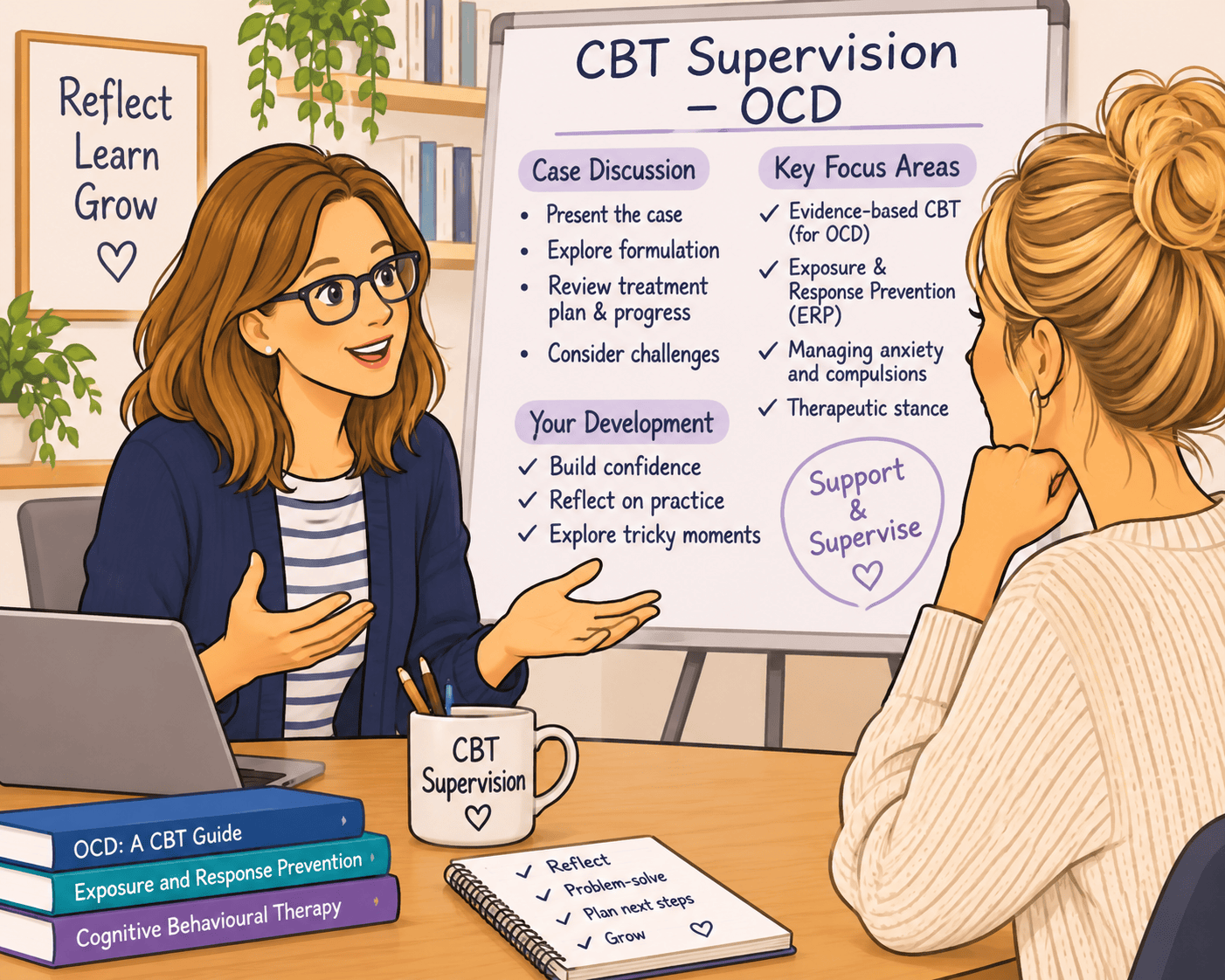
Working with OCD can be both rewarding and clinically challenging. Although we have effective, evidence-based treatments, translating the OCD model into practice isn’t always straightforward. Recognising covert compulsions, identifying subtle reassurance seeking and developing effective Exposure and Response Prevention (ERP) interventions can sometimes leave even experienced therapists questioning their approach.
I’m Terri King, a BABCP-accredited CBT therapist specialising in OCD, and I offer specialist clinical supervision for therapists looking to develop their knowledge, clinical skills and confidence in treating OCD.
A space to think, reflect and develop your OCD practice
OCD is often much more complex than it initially appears. Compulsions aren’t always visible, and clients can become caught up in extensive mental rituals, rumination, internal checking and attempts to achieve certainty.
In supervision, we can explore the individual OCD formulation, identify the processes maintaining the difficulties and consider how best to translate this understanding into effective treatment.
Areas we might explore include:
- OCD formulation: Understanding triggers, appraisals, responsibility beliefs, intolerance of uncertainty and the maintenance of the OCD cycle.
- Exposure and Response Prevention (ERP): Developing meaningful exposure tasks, addressing avoidance and supporting effective response prevention.
- Covert compulsions and Pure O: Identifying mental rituals, rumination, internal checking and less obvious neutralising strategies.
- Reassurance seeking: Recognising direct and subtle reassurance seeking and avoiding inadvertently reinforcing OCD.
- Complex presentations: Working with distressing intrusive thoughts, overvalued beliefs and difficulties engaging with ERP.
- When treatment gets stuck: Reviewing formulations, identifying maintaining factors and considering how to adapt treatment.
My approach to supervision
I believe good supervision should be collaborative, clinically focused and supportive. It’s an opportunity to think beyond the obvious, explore uncertainty and develop a deeper understanding of what’s happening within the therapeutic process.
My approach is informed by Christine Padesky’s CBT supervision model, which encourages therapists to identify a specific supervision question and work systematically through their clinical understanding. This includes considering the cognitive formulation, whether the treatment plan follows from that formulation, the skills needed to deliver treatment and how the client is responding.
I particularly value this approach because it encourages therapists to develop their own clinical reasoning rather than simply looking to the supervisor for answers.
I want supervision to be a space where you can bring challenging cases, reflect on your interventions and consider alternative ways of working without feeling judged.
A little about me
I’m a BABCP-accredited CBT therapist with specialist experience in OCD and health anxiety. My background includes working across NHS and private practice settings, as well as hospital-based mental health services.
My clinical approach is grounded in evidence-based CBT, with a particular interest in the complexities of OCD presentations and the application of ERP in clinical practice.
I enjoy supporting other therapists to deepen their understanding of OCD and develop the confidence to deliver effective, evidence-based treatment.
Interested in OCD clinical supervision?
If you’re a therapist looking for specialist supervision to support your OCD work, I’d love to hear from you. Whether you’re looking for ongoing supervision or would like to discuss a particular clinical challenge, please get in touch through Southampton Therapy Services.
Developing confidence in treating OCD starts with understanding the processes that keep it going.

